


What should you send ahead when your partner moves to a new city for work, but you and the rest of the family need to stay in your current home for a few more weeks? Moving in stages means deciding what your partner needs to get settled and what needs to stay behind until everyone else is ready to leave.
Your partner may need a desk for the new job. You may still need that same desk to work from home. Beds, cookware, and other shared belongings can raise similar questions when you’re trying to keep two places usable.
Before arranging an early furniture shipment, check what the first address already provides. A furnished apartment may mean your partner can start with clothes, work equipment, and personal necessities while the household goods move later.
This guide walks through what to take on that first departure, which belongings to keep at home, and what to discuss with your mover if you need more than one shipment.

Which dates should you give your mover?
There are lots of reasons why a family may have to move in stages. One partner may need to start work in a new city while the kids finish school. One half of the couple may have to go ahead while the other waits for the home to close.
Whatever the reason, your mover will need to coordinate when your belongings can be picked up from your current home and when someone will be available to accept delivery at the new address.
Write down these four dates:
- When your partner leaves
- When the rest of the family leaves
- When you need to be out of your current home
- When you can move into the new home
Check whether you’ll need somewhere to stay between leaving your current home and moving into the new one. If your belongings will arrive before the rest of the family, arrange for someone to meet the movers.
Ideally, you can discuss those details before anyone starts packing. But that’s not always possible. If a job offer comes with a short turnaround, identify your partner’s immediate travel needs first, then arrange a conversation about the household move. Explain which dates are fixed and which have room to change.
Ask how pickup and delivery timing would work for your particular move. Build travel plans around the arrangements your mover actually offers, rather than assuming a delivery will happen on the day someone reaches the new city.
With white glove moving (another name for full service, turnkey, or end-to-end moving), your Move Consultant can help plan the packing, pickup, and delivery around those dates. You’ll have someone to coordinate the moving work and talk through changes, so you spend less time chasing details while your family is in two places.

What should the partner who’s moving first take with them?
A furnished apartment and an empty house call for different early packing lists. Find out what’s already available before deciding that your partner needs furniture from home.
Think through a normal workday in the first location: getting dressed, having breakfast, getting to work, and spending the evening there. Think about what your partner will need during evenings and weekends, too, especially for meals, laundry, and downtime.
- Pack enough clothes and shoes for work and days off between laundry loads.
- Keep personal documents, medications, glasses, and frequently used chargers accessible during travel.
- Check whether work equipment belongs to your employer and has its own transport instructions.
- List bedding or basic kitchen items only after checking what the accommodation provides.
- Include a familiar personal item that makes the temporary space more comfortable.
Once that list is complete, look at what can travel with your partner and what needs a separate discussion. A month away may require more than a weekend bag, but it may still require much less than a truckload.
Share the list with your Move Consultant and identify the items your partner will carry personally. A white glove moving team can plan the household packing around what needs to leave early and what you’re still using. If professional packing is part of your service, you can hand off that work while keeping travel essentials within reach.

What needs to stay in the current house?
People at both homes still need to cook, sleep, work, and get ready each morning. Some of the things your partner wants to take may also be things the rest of the family uses every day. A home office chair may belong to your partner but still be the only comfortable place for you to work. The family computer may hold documents both of you need. The small saucepan that seems convenient for a temporary apartment may also be the one used for breakfast every day.
Before adding those items to the early packing list, walk through your current home and check what you’ll still need until you leave.
As you decide what stays:
- Keep items the family will still need at home, even if they belong to the partner who’s leaving first.
- Leave enough beds, seating, cookware, and cleaning supplies for everyday life.
- If an item is needed in both places, see whether your partner can borrow one, use what’s already at the new address, or buy a basic replacement.
You can record those choices in a shared inventory with columns for the item, where it’s needed during the gap, and when it can leave. Your Move Consultant can help create a packing plan that fits your household’s schedule. If you’re arranging two shipments, the full service moving team can pack the early shipment while leaving everyday essentials available until the family moves.

How should you organize the belongings that’ll go in the second stage of the move?
A box packed weeks ahead can be easy to forget by the time the main move happens. Put its destination and contents on the label, and record where you’ve placed it in your inventory.
Pack items you won’t need before the move, such as out-of-season holiday decorations. Leave everyday items, like your coffee maker, unpacked until you’re finished using them.
Set aside a clearly identified area for personal items traveling with the family. Tell anyone helping with packing which bags and belongings are staying out of the load. A note taped to a bag helps, but a brief walkthrough gives everyone a chance to ask questions.
Before the main pickup, review the inventory with your partner. An item may already have traveled with them, or they may have learned that the new place has less room than expected. Update the list before those changes become a surprise beside the truck.
A white glove moving team can handle the inventory, labeling, and packing as part of your agreed service, so you don’t have to organize every box yourself.
Should some belongings move ahead of the family?
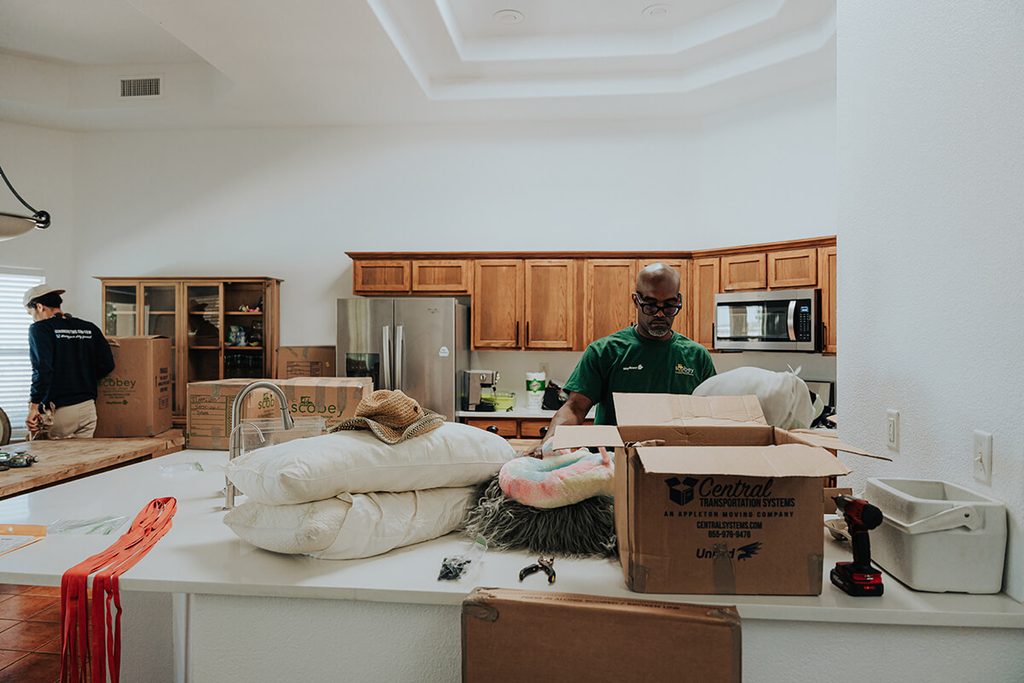
Your partner may be moving into an empty home and need a bed or desk before the rest of the family arrives. In that case, sending a few larger items ahead may be worth considering. If they’re staying in a furnished apartment, the household goods may be able to wait until everyone is ready to move.
With a white glove move, your Move Consultant can help you compare those options. Explain what your partner needs, where they’ll be staying, and when they need to arrive. Your consultant can review whether a separate early shipment is available and explain the costs before you choose a plan.
If you choose separate shipments, your consultant can coordinate the agreed pickups and deliveries. They’ll work through access at each address and who will meet the crew. If the first address is temporary, they can also help plan for the later move to your permanent home.
You decide which belongings you need at each home. The moving team handles the packing and transport included in your plan, so you don’t have to manage each shipment yourself.
What if your belongings need storage before delivery?
Your current home may need to be empty before your new home is ready. Or your partner’s temporary accommodation may have no room for the furniture. Warehouse storage can give your belongings somewhere to stay during that gap.
Scobey offers both short-term and long-term warehouse storage, with delivery to your new home arranged as part of your moving plan. Your Move Consultant can coordinate packing, pickup, storage, and later delivery, so you don’t have to rent a separate unit or move the stored items yourself. Review the storage and delivery charges with your consultant before agreeing to the plan.

Coordinating the move when your family is moving in stages
You may be preparing for a new job, helping children finish a school term, or closing out the current house. Keeping track of which belongings are available on each date adds another task to that list.
Working with full service movers gives you a way to discuss the household move as a coordinated service. Ask which packing and moving tasks your chosen plan includes, and explain the belongings that need to remain accessible until the family leaves.
Scobey Moving & Storage would love to help you discuss a plan around your departure dates. Bring your inventory and timeline to a Move Consultant so you can explore the available options before deciding what goes first.
Ready to work out your moving schedule? Contact Scobey today.
FAQ
Pack work clothes, personal documents, medications, chargers, and the everyday items your partner’s first accommodation doesn’t provide. Keep shared essentials at the current home while they’re still needed, and discuss any furniture transport with Scobey before adding an early shipment.
Give your Scobey Move Consultant each person’s departure date, the dates you can access both homes, and a list of belongings needed early. Your consultant can use those details to plan packing, review shipment options, and coordinate the agreed pickup and delivery arrangements.
Scobey’s white glove moving service can coordinate packing, pickup, and delivery around your family’s separate departure dates. Your Move Consultant can review whether an early shipment is available and arrange short-term or long-term warehouse storage if your belongings need to wait before delivery.
Avoid sending shared essentials ahead while the family still needs them, loading personal travel bags onto the moving truck, and assuming furniture will arrive on the same day you do. Keep those decisions in your moving plan and confirm the delivery arrangements before relying on them for sleeping or meals.

Eric Barker is the Vice President of Commercial Services at Central Transportation Systems and a recognized voice in the moving and relocation industry. With over a decade of experience in military household goods logistics, operations, and commercial moving services, Eric has played an active role in shaping conversations around the future of PCS (Permanent Change of Station) moves and military relocation policy. He currently serves on the board of the Southwest Movers Association and the IAM DAB DMV (International Association of Movers, Distinguished Agents Board, DMV chapter), reflecting his ongoing commitment to industry leadership and standards. He recently joined industry leaders at the 50th Annual Dispatchers Convention to discuss the major structural changes affecting military moving in 2026. Through his leadership and operational expertise, Eric helps ensure military families receive reliable, efficient, and professionally coordinated moving services during periods of significant industry transition.