

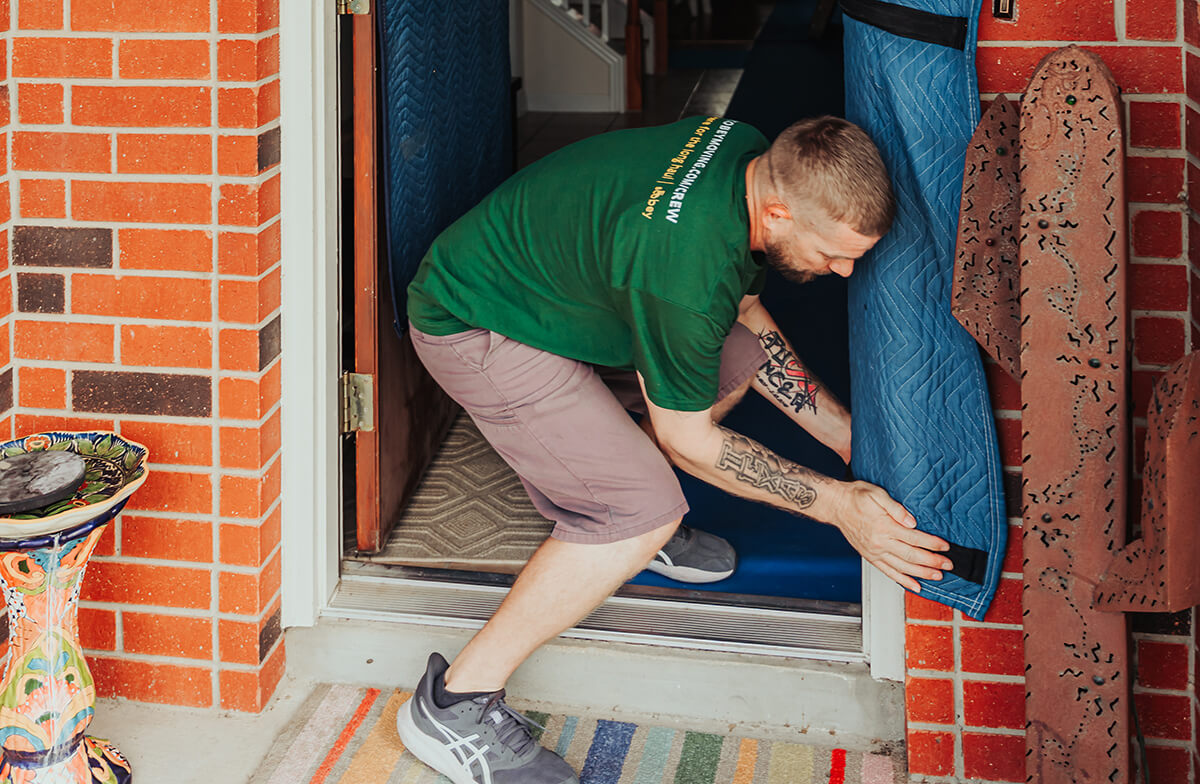
When movers carry a dining table through your front door, they should take as much care with the doorframe as they do with the table. That’s the care you should expect from any mover you hire.
At Scobey, we take pride in treating your home and belongings with the care we’d want on a move of our own. If you find a chip in that table while you’re unpacking, we want to hear about it. We’ll take your concern seriously and do what we can to make it right.
If any of your belongings go missing or arrive damaged, you can file a moving company damage claim. It’s a written request asking the mover to look into what happened. You may be able to file it online, depending on who handled your move. The details you share help the mover understand what you found.

What should you record when you find damage?
Like we just mentioned, a great mover treats your move like their own. But if the unexpected happens and there’s damage to an item, what you do first depends on whether the crew is still there.
If you find damage while the movers are there
Point out the damage and note it on the delivery paperwork. That gives you and the mover a record of what you saw when the item arrived.
If you find damage after the movers leave
Let your moving contact know as soon as you can. Tell them what was damaged and when you noticed it. If you have an inventory number, include it so they can match the item to your shipment.
Take photos and keep the damaged item and its packaging
Take one photo of the whole item so the mover can identify it, then take a close-up that shows the damage. If you still have the box or wrapping, take a photo of that too. It can help show how the item arrived.
Keep the item and relevant packaging in case the mover needs to inspect them. If the item is unsafe to handle (for example, a mirror with loose shards of glass), ask the mover how to document it safely.
If you find damage to the home itself (like a gouge in a stair railing), contact the company whose crew caused it and ask how to report it. If you’re unsure who to contact on a move with Scobey, start with your Move Consultant. If an item was lost or damaged during your move, here’s how to file a claim.

What should you send with your damage claim?
To look into your claim, the mover needs to know which move it was and which items were lost or damaged. The written moving estimate, moving contract and inventory help the mover identify the shipment. Your photos and records of the item’s value help explain what you’re asking the mover to address.
If you’ve arranged for the crew to pack, they can handle the boxes while you set aside the papers you’d like to keep close. A folder that travels with you is one way to keep the contract and any inventory you receive easy to find.
For each item that’s missing or damaged, include these details in your claim.
- The item description and its inventory number, if it has one.
- What’s missing or where the item is damaged, and when you noticed it.
- Any photos, delivery notes or receipts you have that help show what happened or what the item was worth.
- The amount you’re requesting and the information you used to work it out.
An original receipt can be hard to find after a move. If you already have other records, tell the mover what you have and ask what the claims team can use. It helps to keep each item’s photos and paperwork together so the person reviewing the request can see which records go with it.
Why does the coverage you chose matter?
Valuation is the part of your moving contract that explains what the mover may owe if your belongings are lost or damaged. Check your paperwork for the terms that apply to your move before deciding what to ask for in your claim.
For a move across state lines, your paperwork will show one of two options:
• Released Value limits the mover’s responsibility to 60 cents per pound for each lost or damaged item.
• Full Value Protection gives the mover the option to repair a covered item, replace it with a similar one, or pay the cost of repair or replacement. The declared value of your shipment sets a limit, and special limits can apply to high-value items.
If you moved entirely within Texas, check your contract for the terms you and your mover agreed to. If you bought separate moving insurance, check that policy for what it covers and how to file with the insurer.

Where do you get the right damage claim form?
The company that arranged your move may be different from the one that moved your belongings, especially if you booked through a moving broker. For a move entirely within Texas, look for the mover or its agent named on your moving services contract. For a move across state lines, check your bill of lading for the carrier that issued it.
For a Texas-only move with Scobey, ask your Move Consultant for the form and where to send it. If Mayflower is the carrier for your interstate move, you can submit the claim through Mayflower’s online claims page. If your paperwork names a different carrier, follow its written filing instructions. If you’re unsure which company should receive the claim, ask your Move Consultant.
Does noting damage at delivery count as filing a claim?
The delivery note records what you saw. For both Texas-only and interstate moves, you still need to submit a separate written claim. In the claim, tell the mover what happened and what you’re asking them to do about it.
Use the claim form for your move if your mover provides one. What you include depends on where you moved.
- If you moved across state lines, give the carrier the details that identify your shipment and say you’re holding it responsible for the loss or damage. State the dollar amount you’re requesting or give enough information for the carrier to calculate it. See the federal filing requirements.
- If you moved entirely within Texas, give the mover enough information to identify your shipment and look into what was lost or damaged. Say how much you’re requesting or what else you’re asking the mover to do. See TxDMV’s claims guidance.
Keep a copy of the claim and everything you sent with it, along with proof it arrived.

When is your written claim due?
It might take a few days of unpacking before you reach every box. Even if you find damage later, use the delivery date on your moving paperwork to check when your claim is due.
- If you moved entirely within Texas, the mover must receive your written claim within ninety days of delivery. If the shipment never arrives, the mover must receive the claim within ninety days after a reasonable time for delivery has passed.
- If you moved across state lines, federal law gives you at least nine months to file. FMCSA advises filing within nine months after delivery. Check the bill of lading or moving contract for the deadline that applies to your shipment. See FMCSA’s consumer guidance.
If you’re unsure of the last day to file, or your interstate shipment never arrived, contact the carrier promptly and ask which deadline applies.
You can start a moving damage claim as soon as you have the details. International and military moves use separate procedures. If either applies to you, your Move Consultant can point you to the instructions for that shipment.
What can make filing easier?
When you talk with your Move Consultant, ask who to call if something arrives damaged. Full service movers can pack and move your belongings, then unpack them at your new home if you’d like. You can go over what paperwork you want to keep with you while you’re deciding what to leave for the crew.
Scobey Moving & Storage is an agent for Mayflower, a national van line. You have a local Move Consultant to ask about your shipment. If Mayflower carries your belongings across state lines, you can also file a claim online and check its status. If you’d like to know how our crews work in someone’s home, you can read what customers have shared in more than a thousand Google reviews.
If something was damaged, let your moving contact know. Ask which form applies so your report reaches the people who can look into it.

Planning a move? Let’s talk about how we’ll protect your home and belongings.
Maybe it’s the dining table you want wrapped with extra care or the tight turn at the top of the stairs. Tell your Scobey Move Consultant what you’d like us to know about your home and belongings. We’ll walk you through how we’d handle your move.
Contact Scobey Moving and Storage today!
Frequently Asked Questions
For a move booked with Scobey, use the form for your shipment and list the items that are missing or damaged. Include enough information to identify your shipment. Add inventory numbers for the affected items if you have them. Add any photos or records you have that support the amount you’re requesting, and complete any contact or signature fields the form asks for.
For a move entirely within Texas, your mover must receive your written claim within ninety days of delivery. If the shipment never arrives, the ninety days start after a reasonable time for delivery has passed. For an interstate household move, federal law gives you at least nine months to file. Check your bill of lading or moving contract for the deadline for your shipment. If your interstate shipment never arrived, ask the carrier promptly which deadline applies.
A moving damage claim asks the carrier to address a loss or damaged item. A complaint asks a regulator to look into a possible violation. To seek payment or another remedy, submit a written claim to the carrier responsible for your shipment within the filing deadline.
Submit a claim under your moving contract to the carrier responsible for your shipment. For a claim under a separate moving insurance policy, contact your insurer. Ask what your policy covers, how to file, and whether they need a copy of the claim you sent to the carrier.
For a move entirely within Texas, file with the mover or its agent named on your moving services contract. If that’s Scobey, ask your Move Consultant for the form. For a move across state lines, check your bill of lading for the carrier that issued it. If that’s Mayflower, file through Mayflower’s claims page.

Eric Barker is the Vice President of Commercial Services at Central Transportation Systems and a recognized voice in the moving and relocation industry. With over a decade of experience in military household goods logistics, operations, and commercial moving services, Eric has played an active role in shaping conversations around the future of PCS (Permanent Change of Station) moves and military relocation policy. He currently serves on the board of the Southwest Movers Association and the IAM DAB DMV (International Association of Movers, Distinguished Agents Board, DMV chapter), reflecting his ongoing commitment to industry leadership and standards. He recently joined industry leaders at the 50th Annual Dispatchers Convention to discuss the major structural changes affecting military moving in 2026. Through his leadership and operational expertise, Eric helps ensure military families receive reliable, efficient, and professionally coordinated moving services during periods of significant industry transition.