


It’s the beginning of September. You moved into this house six weeks ago, and half the garage is still boxed.
It’s just been so busy since the move. The living room, kitchen, bathrooms, and bedrooms are all set up, but the garage? Those boxes are in the “I’ll get to it later” category.
Here in Texas, it gets hot.
The Texas heat is a factor to consider at each stage of the move, from packing, moving day, to storing furniture in a hot garage or attic after the move is over.
In the summer and early fall, it’s important to evaluate whether your stored boxes contain heat-sensitive items. Preventing heat damage depends on placing them in either a cooled part of the house, inside a climate-controlled warehouse, or in the car with you. Garages and attics can get extremely hot.
A full service move takes the Texas heat into account from the time the first box is taped. Packing, loading and transport, and storage are all handled by teams who understand the challenges of moving in the dog days of a Texas summer or fall.
How Should You Pack for a Move in a Texas Summer?
Keeping your items safe in the Texas heat has three stages.
Packing is stage one, and often determines whether items are likely to be damaged by heat weeks before anything is loaded on the truck.
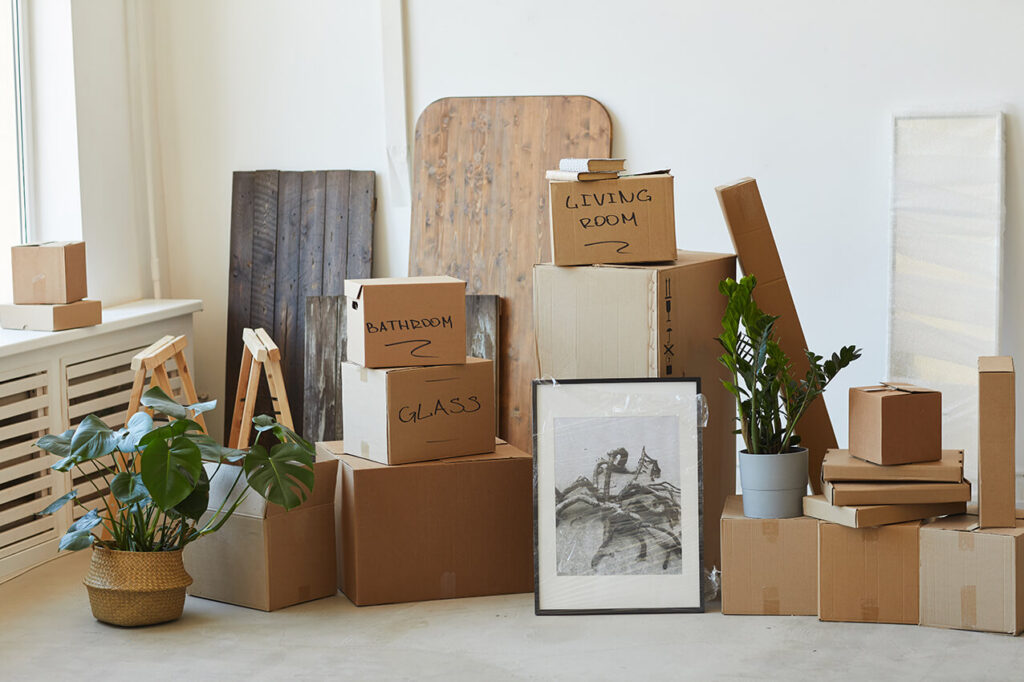
Heat damage often occurs due to two common habits. The first is staging: finished cartons get carried out to the garage as each room empties, because that’s where the floor space is, and then they sit in the hottest room in the house waiting for the truck. The second is mixing items during packing. A candle, a photo album, and a phone charger end up in one box because they came off the same shelf.
A few things worth doing differently when you’re packing during the hot months:
- Keep finished boxes in a room with air conditioning, even when the garage is the only place with real floor space.
- Keep wax, media, and electronics out of the same carton as anything you’d hate to lose.
- Make sure textiles are completely dry before they go in a box, because warmth plus trapped moisture is how mildew starts inside a sealed carton.
- Seal boxes properly, so humidity isn’t cycling in and out of them for the weeks before the move.
- Label the cartons that need to go straight into the cooled part of the new house, so nobody has to guess while they’re unloading.
Following these tips can help make sure your box of items is still fine in October when you open it. Or, a full-service mover like Scobey can handle the decluttering and packing for you, so that you don’t have to worry about any part of the process.
What Does Texas Heat Do To Items You’ve Packed?
What Changes on Moving Day When It’s a Hundred Degrees Out?
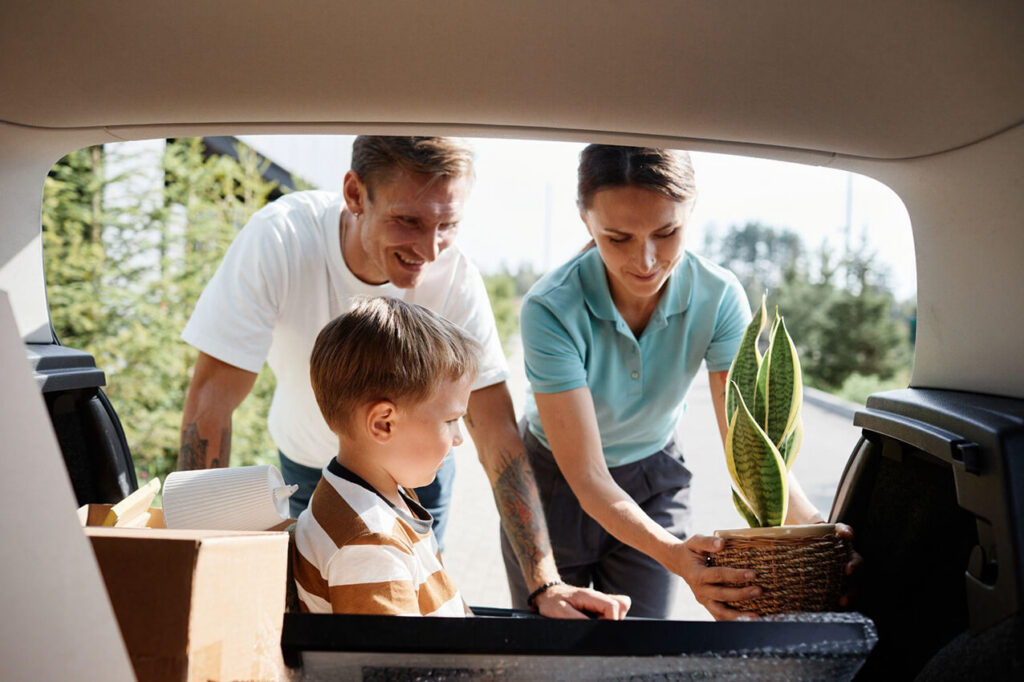
Stage two of keeping your items safe in the heat is moving day, when things are loaded on the moving truck. A truck box is a sealed metal room with no air conditioning, and on a Texas afternoon it’s hotter inside than out. Nearly everything you own makes that trip without a problem. A short list shouldn’t be on it.
Put these in the car with you:
- Photo albums, negatives, film, and any tape or disc holding family video.
- Prescription medication.
- Laptops, hard drives, and any drive that holds the only copy of a file.
- Candles and the cosmetics bag.
- Jewelry, documents, and small heirlooms.
- Any musical instrument you can carry, rather than leaving it in a sealed truck all afternoon.
If you have items that require temperature controlled transport (or aren’t sure), talk with your move consultant. A quality mover will work with you to ensure your items have the protection they need. But the rule underneath that list is short: if it’s irreplaceable or it melts, make sure it’s in the cabin of a car with the air running, along with your overnight essentials box.

How Does a Texas September Affect Items in the Garage?
Whether you’ve just moved to Texas or are packing to relocate from Abilene to Houston, the garage is where the boxes usually are stored. It’s also usually the hottest room in the house. Because of air conditioning, you may not even realize how hot the garage is actually getting.
Stage three of keeping your items safe in the heat starts the day the moving truck pulls away.
Generally speaking, here are items NOT to store in the garage:
- Anything with wax in it: candles, wax melts, crayons, cream cosmetics, lip products.
- Electronics, including the ones in boxes you meant to sell. Batteries, chargers, the printer, the spare TV.
- Vinyl records, cassette tapes, videotapes, film, slides, and loose photo prints.
- Musical instruments, especially anything with a glued joint or a wooden body.
- Bedding, upholstery, and textiles you care about, because heat plus humidity is how mildew starts inside a sealed box.
- Paint, aerosols, propane, lighter fluid, and pool chemicals
In short, storing items with adhesives, magnetic coatings, or wood joints can be damaged when they’re stored in a hot garage.
Why Is the Attic the Wrong Place for Photo Albums, Tapes, and Records?
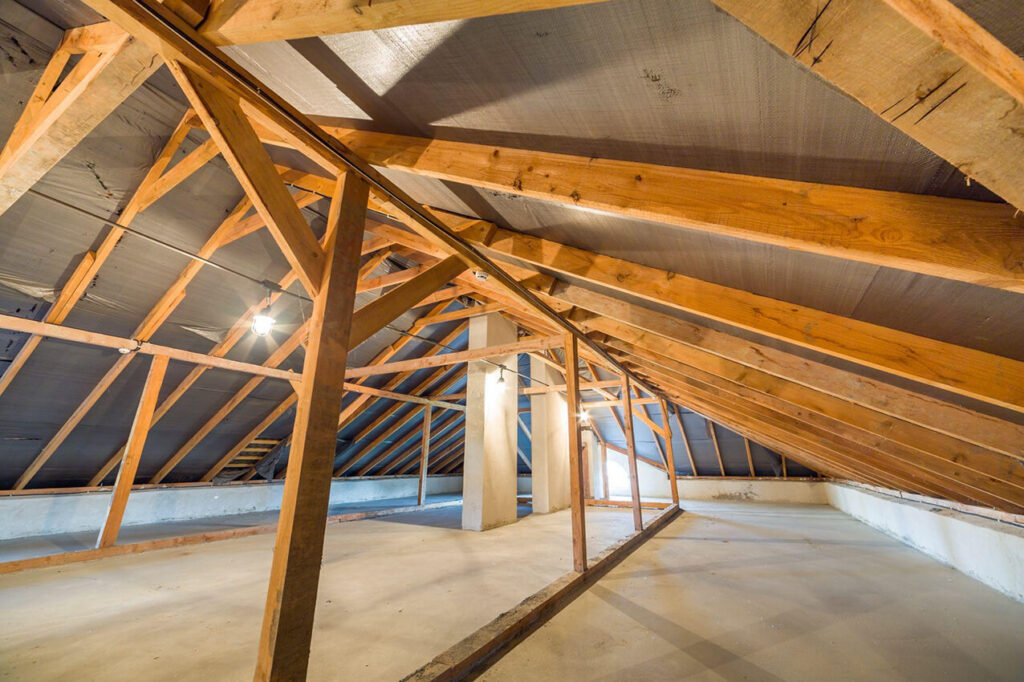
If boxes of photos, old tapes, or records aren’t in the garage, there’s a good chance that people store them in the attic. But this is another space in the house where temperatures can fluctuate greatly.
Photographs need the temperature held under seventy-five degrees. Video tape is fussier, needing fifty-five to seventy degrees and humidity between thirty and fifty-five percent. A Texas attic in August misses all of that, on every day, at every hour. The National Archives says to store family collections out of damp basements, garages, and hot attics, and singles out attics and garages as unregulated climates for video and cassette tape.
It’s difficult because damaged items often look fine on the outside. A warped record still looks like a record. A tape that has shed its coating still looks like a tape. You might not know something is wrong until somebody wants to watch a wedding video at a graduation, and the machine plays static.
If a box of albums is the thing you’d grab in a fire, it doesn’t belong in the attic. It belongs in a closet inside the cooled part of the house.
What Happens to Candles, Makeup, and Anything Made of Wax?
They usually don’t survive, and they take the items that were next to them in the box down, too.
A candle in a hot garage melts, runs, and re-sets in the shape of the box. Cream blush and lipstick separate into oil and pigment and never come back together. Wax melts fuse into one brick. While many of these items aren’t expensive to replace on their own, melted candles and makeup can ruin the linens, paperwork, or the framed print that was also in the box.
Can Furniture Be Damaged by Changes in Heat and Humidity?
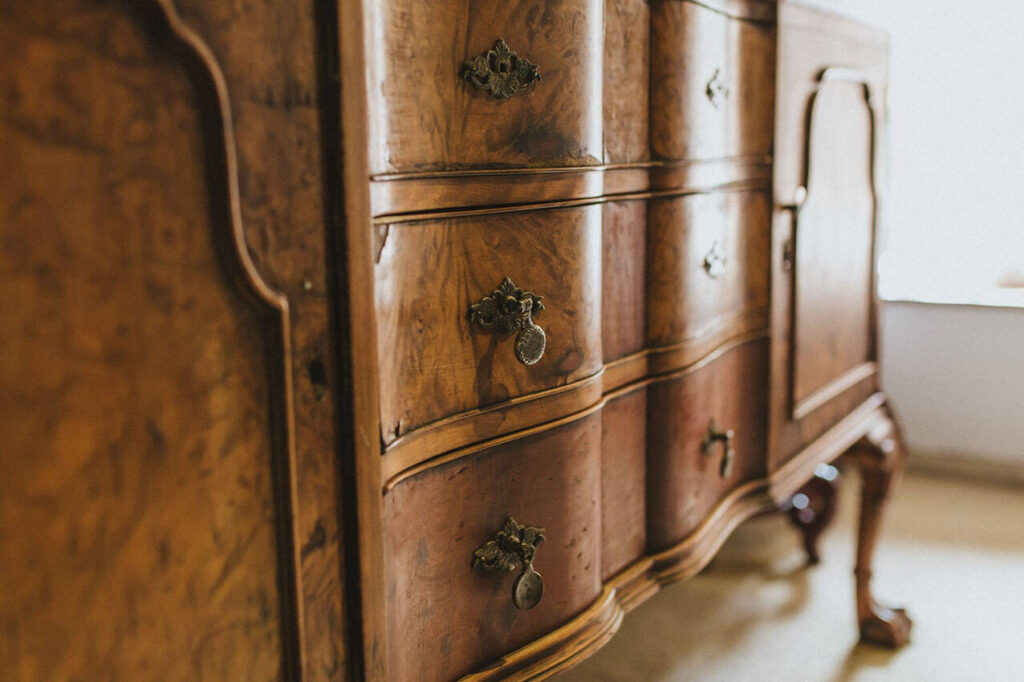
If you’re moving someplace from the Gulf Coast to dry, west Texas, you may be wondering if your furniture will be safe in storage. Wood matches its environment, and a Houston house and a Round Rock house aren’t the same environment.
Coastal Texas holds far more humidity in the air than Central Texas does. A dresser that spent fifteen years equalized to Houston arrives in Round Rock and starts giving up moisture. Panels shrink, joints loosen, veneer lifts at an edge, and a tabletop that was flat develops a seam. It isn’t sudden, and it often isn’t visible for a month or two.
Three things help:
- Give a piece a few weeks in the new house before you tighten hardware, refinish anything
- Keep it off an exterior wall and out of direct sun while it settles.
- Wooden items are often most vulnerable during the first few weeks. Avoid storing them in the garage as they’re acclimating to the new environment.
Older pieces need more of that patience than new ones, because the joinery is often doing more of the work. Our guide to moving irreplaceable items covers antiques in more depth.
Where Should Everything Else Go While You Figure Out the New House?
This is where the garage usually wins by default. There’s no decision to make, no cost, and the boxes are already sitting there.
The alternative is that the things you haven’t decided about wait somewhere the temperature doesn’t move. Not all of them need to. Dishes, tools, and most furniture come through a well-built warehouse without conditioning, which is worth knowing before you pay to condition everything. The narrower list is where it matters: the media you’ve been meaning to digitize, the older wood pieces, the box of albums, and the furniture that won’t fit until you redo a room. A warehouse that holds its temperature is the right address for that list, and a good one is inventoried so you know what’s in there without opening a single box. It also isn’t a hundred and something degrees in the summer.
One thing worth checking while you compare companies: a broker isn’t a mover, and a broker doesn’t own a warehouse, so “climate-controlled storage” on a broker’s quote is a promise about a building nobody at that company has walked through.

Moving in the Texas Heat
The packing matters as much as the destination. Full service movers pack the house themselves, which means materials that hold up to a Texas summer, boxes sealed so humidity can’t cycle in and out of them, and wax, media, and electronics kept out of the same carton in the first place. It also means somebody who has loaded a few hundred Texas households can look at yours and say which part of it needs a temperature that doesn’t move and which part is fine in a standard warehouse, before you pay to condition all of it.
Scobey Moving and Storage is a full service mover, so the packing, the move, and household storage are one job rather than three you line up yourself. Ask your move coordinator to walk the inventory with you and sort it: what goes straight into the new house, what needs conditioned space, and what can sit in standard storage until the room is ready.
You’re already managing a new house, a new commute, and a garage you’ll get to. You shouldn’t have to also worry whether your items will be safe in the Texas heat.
Whether you’re planning a move or wondering if you need storage for your items to protect them from the Lone Star State’s weather, contact Scobey Moving and Storage today.
Frequently Asked Questions
An attached garage in direct sun runs meaningfully hotter than the outside air, so on a hundred-degree Central Texas afternoon the interior climbs well past that. It also holds heat overnight instead of releasing it, which means stored items sit at elevated temperature for weeks rather than hours.
Candles, cosmetics, prescription medication, photo albums, film, tapes, and anything holding the only copy of a file should ride in your car instead. A sealed truck box has no air conditioning and gets hotter than the air outside it. Paint, aerosols, propane, and pool chemicals can’t legally go on the truck at all, and a licensed mover like Scobey Moving and Storage will tell you that at the estimate rather than on loading day.
A hot attic is a perilous place for photographs, because they need the temperature held under seventy-five degrees and a Texas attic often runs far above that all summer. Video and cassette tape need fifty-five to seventy degrees with relative humidity kept between thirty and fifty-five percent to stay safe. The National Archives advises keeping family collections out of hot attics and garages for exactly that reason. A closet inside the cooled part of the house or climate-controlled storage are better options.
Keep anything held together by wax, adhesive, or a magnetic coating out of the attic, along with anything irreplaceable. That covers photographs, film, tapes, records, candles and cream cosmetics, electronics and batteries, instruments, and documents. Those are the heat-sensitive items in an ordinary household, and value isn’t the test: a five-dollar candle and a fifty-year-old record are both on the list.
Most of a household doesn’t need climate-controlled storage. Dishes, cookware, metal and plastic furniture, tools, and most upholstered pieces hold up in a well-built warehouse without temperature control, particularly when they’re boxed and placed in wooden vaults. The narrower list that does need it is media, photographs, wax, electronics, instruments, and older wood furniture, which loosens at the joints when humidity keeps cycling. Ask a full service mover like Scobey Moving and Storage about which items need climate-controlled storage.
Climate-controlled storage does protect wood furniture, because it holds humidity steady instead of letting it rise and fall with the weather outside. Wood takes on and gives up moisture as the air around it changes, and that cycling is what loosens joints, lifts veneer, and opens seams in a tabletop. Older pieces feel it more than newer ones, since the joinery is doing more of the work.
An early start is generally the better slot for a Texas summer move, and most crews already prefer it. Loading before the height of the afternoon heat keeps the truck box cooler while your belongings are inside it, and it keeps the crew working at a safer pace. Ask your mover what their summer start times look like when you book.

Eric Barker is the Vice President of Commercial Services at Central Transportation Systems and a recognized voice in the moving and relocation industry. With over a decade of experience in military household goods logistics, operations, and commercial moving services, Eric has played an active role in shaping conversations around the future of PCS (Permanent Change of Station) moves and military relocation policy. He currently serves on the board of the Southwest Movers Association and the IAM DAB DMV (International Association of Movers, Distinguished Agents Board, DMV chapter), reflecting his ongoing commitment to industry leadership and standards. He recently joined industry leaders at the 50th Annual Dispatchers Convention to discuss the major structural changes affecting military moving in 2026. Through his leadership and operational expertise, Eric helps ensure military families receive reliable, efficient, and professionally coordinated moving services during periods of significant industry transition.